Israel’s political transition has entered a critical stage, but winning the president’s mandate and building a government are proving to be very different tasks.
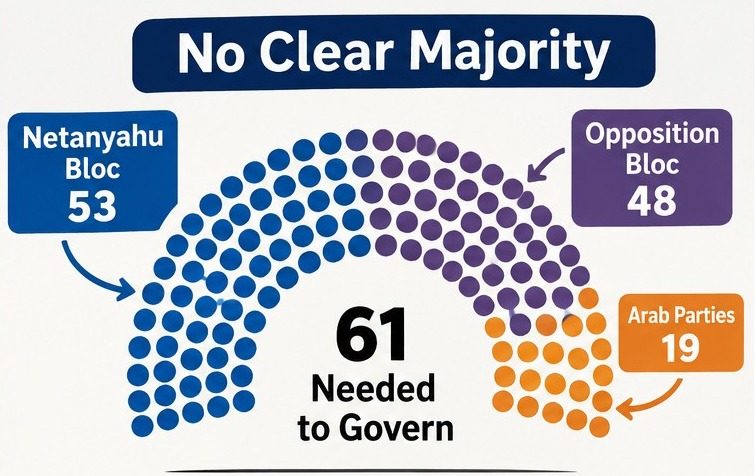
Gadi Eisenkot has been tasked by President Isaac Herzog with forming the next government. The numbers show how hard that will be. Netanyahu’s bloc holds 53 seats in the 120-member Knesset, Eisenkot’s Jewish opposition partners hold 48, and the Arab parties hold 19. That leaves him needing at least 13 more votes to reach 61.
The arithmetic makes the charedi parties pivotal. Shas and United Torah Judaism could supply the missing support, but their central demand, a satisfactory arrangement for yeshiva students and military service, collides with one of Eisenkot’s major campaign commitments.
The other route is outside support from Arab lawmakers, which carries its own political cost, especially among voters who object to depending on those parties to sustain a government.
The opposition’s victory does not automatically translate into a workable coalition. Its members agree on the need for change, but not necessarily on what comes next. The key question is whether Eisenkot can offer the charedi parties enough on the draft without losing the secular and nationalist partners who brought him this far. A coalition built on compromises from both sides could succeed, but it would begin its life with real internal tension.