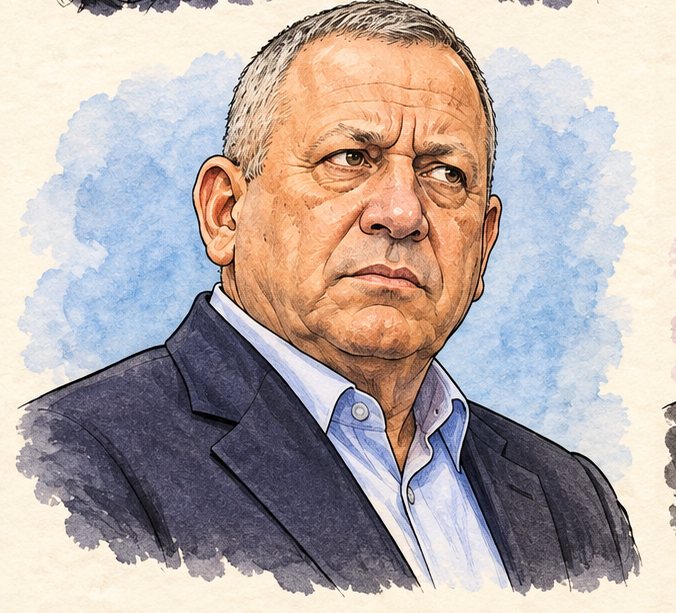
Gadi Eisenkot has been handed the first opportunity to form Israel’s next government, but the arithmetic is far from simple. With 28 days to reach an agreement, and a possible 14-day extension, the former IDF chief will need to secure the support of at least 61 Knesset members. Much of that effort is expected to center on two parties that have so far remained firmly in Netanyahu’s camp: Shas and United Torah Judaism.
Together, the two charedi parties hold 13 seats — enough to make them central players in the coalition negotiations. Eisenkot’s associates have reportedly explored a government that would include UTJ while relying on Ra’am to abstain in a confidence vote. Avigdor Liberman, despite his longstanding opposition to a government dependent on Arab parties, has indicated that he would support bringing the charedi parties into the coalition.
For UTJ, however, the question is not simply which government offers a better political arrangement. The draft issue remains the overriding concern. Although the party has left the door open to discussions with Eisenkot’s representatives, it wants a resolution on the status of yeshiva students before committing to any arrangement.
A recent Hamodia editorial underscored the depth of that concern, arguing that another signed political undertaking would not be sufficient. Previous commitments, the editorial noted, have failed to withstand the pressures of coalition politics. Within UTJ, Yitzchak Goldknopf of Ger is reportedly among the more prominent voices favoring an agreement with Eisenkot. At the same time, Netanyahu’s associates are said to be making individual appeals to UTJ lawmakers in an effort to prevent the party from leaving his bloc.
Shas is taking a more cautious approach. The party recommended Netanyahu to President Isaac Herzog, but that has not necessarily closed the door to alternative arrangements. A member of the Moetzes Chachmei HaTorah has indicated that negotiations with Eisenkot should not be ruled out. According to The Jerusalem Post, Shas could consider joining a government if the status of yeshiva students is addressed, although it is reportedly reluctant to move ahead of UTJ.
One scenario being discussed would allow Eisenkot to establish a government initially with outside support from the charedi parties. Formal coalition agreements with UTJ, and possibly Shas, would follow only after legislation addressing the draft issue had been passed.
That proposal highlights the central difficulty facing both sides. Eisenkot has made clear that his bloc intends to pursue charedi conscription, while the charedi parties are looking for meaningful and dependable protections for the yeshiva world. Neither side has much room to retreat without paying a political price.
For now, the negotiations remain open, and the charedi parties have considerable leverage. Whether that leverage can be translated into an acceptable agreement — or whether the differences prove too wide to bridge — may determine the fate of Eisenkot’s mandate and the direction of Israel’s political system in the weeks ahead.